

The college bowl games are just steps to the championship game
When January 1st Meant the End of the College Football season
Once upon a time, January 1st marked the finish line of the college football season. The traditional bowl games played out, a champion was crowned, and players returned to campus to resume their roles as students. That version of the sport no longer exists.
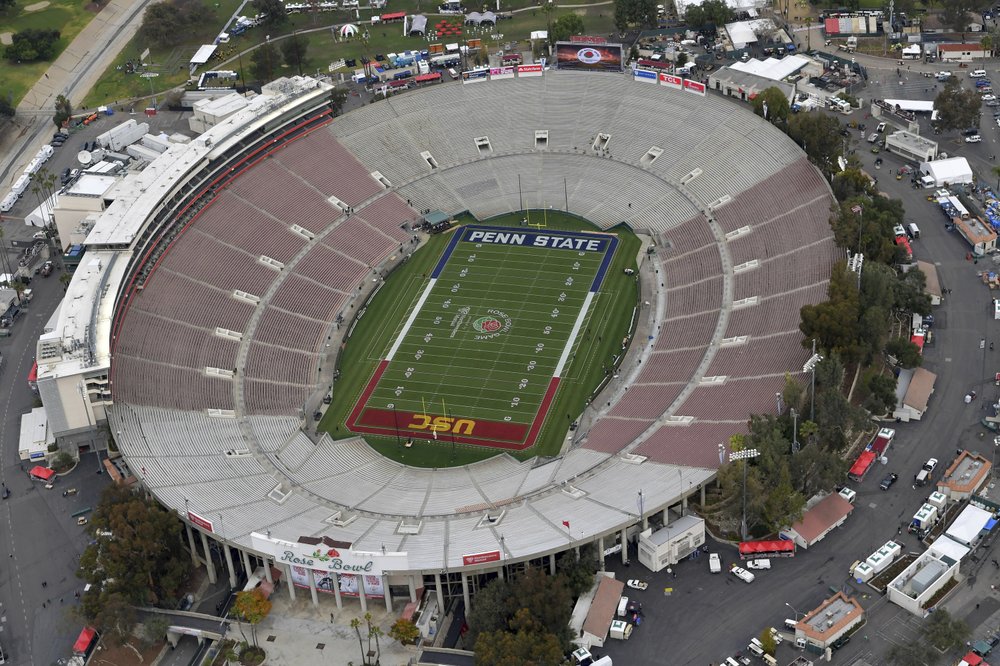
Money changed everything. January 1st is no longer a conclusion. It is now a checkpoint. This year, the Rose Bowl in Pasadena serves as a College Football Playoff quarterfinal. Two more quarterfinal games follow at the Orange Bowl in Miami Gardens and the Sugar Bowl in New Orleans. What was once a ceremonial finale has become one of the most lucrative days on the college football calendar.
A Playoff That Pushes Deeper Into the Academic Year
The expansion does not stop on New Year’s Day. The College Football Playoff continues with semifinal games in Glendale, Arizona, and Atlanta. The national championship game follows on January 19 in Miami Gardens.
That date sits deep into the second semester of the academic year. Classes are underway. Campuses are back in full session. The obvious question lingers in the background. Will the players competing for a national title be excused from attending class?
College football now operates on a professional calendar while still claiming an academic identity. That tension grows harder to ignore with every added game.
Players Are Paid, and the NCAA Is Uneasy
The biggest shift in this new era is money flowing directly to players. Stars now receive compensation through schools, collectives, or third-party arrangements. Name, Image, and Likeness payments have effectively turned elite recruiting into a bidding process.
NCAA leadership does not like this reality. The organization has urged federal lawmakers to intervene and create national standards. Their stated concern centers on fairness and competitive balance. Without regulation, boosters can offer massive financial incentives to steer players toward specific programs.
The system is legal. It is also chaotic. And it has stripped away much of the control the NCAA once exercised.
The “Student-Athlete” Label Under Scrutiny
For decades, the NCAA relied on the term “student-athlete” as a legal shield. That label helped deny players salaries, workers’ compensation, and long-term health care for injuries sustained on the field. Courts often sided with schools, ruling athletes were students, not employees.
As a result, schools avoided financial responsibility for life-altering injuries. Scholarships were presented as fair compensation, though the arrangement overwhelmingly favored institutions.
Now, the landscape has shifted. Players earn money. Games stretch further into the academic calendar. The business looks professional in every way except accountability.
A New Order Nobody Fully Controls
College sports leaders find themselves uncomfortable in the world they helped create. The old model no longer holds. The new one lacks structure.
January 1st used to close the season. Now it opens the most profitable chapter. The page has turned. There is no going back.
Evan Weiner’s books are available at iTunes – https://books.apple.com/us/author/evan-weiner/id595575191
Evan can be reached at evan_weiner@hotmail.com