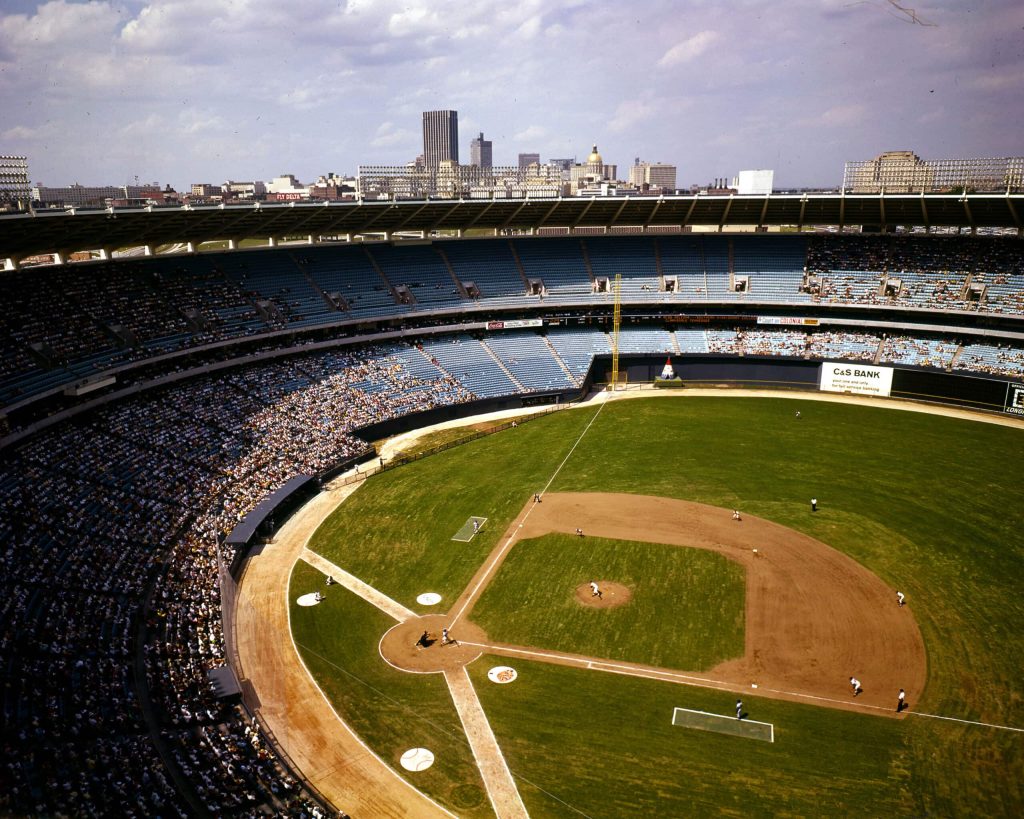



The stadium will be located at the old Atlanta Fulton County Stadium site
Stadiums as Pitstops, Not Destinations
Stadiums and arenas rarely serve as permanent homes. They function as pitstops in the larger race to stay relevant in major professional sports. Atlanta learned that lesson early and has lived it repeatedly for nearly seven decades.
The story begins in 1957, when the Eisenhower Administration expanded Atlanta’s airport and positioned the city as a national transit hub. Local elected officials and business leaders saw opportunity. If Atlanta could become a transportation crossroads, it could also become a major league city. The strategy was straightforward. Build a stadium first. Then chase a professional franchise to fill it.
At the time, baseball still ruled American sports. The National Football League existed, but college football dominated much of the South. Atlanta’s leaders understood the hierarchy. Landing a Major League Baseball team would place the city on the national sports map. Football could follow later and share the same facility if necessary.
Ivan Allen Jr. and the Big League Vision
During his 1961 campaign for mayor, Ivan Allen Jr. made a bold promise. He pledged to build a modern sports facility capable of attracting a Major League Baseball franchise. It was a political risk, but it matched the city’s ambitions.
Allen secured funding and broke ground in 1964. With a stadium rising, he turned to expansion and relocation talks. His first target was Kansas City A’s owner Charlie Finley. Allen negotiated a deal to bring the A’s to Atlanta, but American League owners rejected the move.
The setback did not end the pursuit. Soon after, ownership of the Milwaukee Braves accepted Atlanta’s offer. The Braves relocated in 1966 and became the city’s first major league tenant. Atlanta finally arrived.
Allen also worked both sides of professional football. He engaged the American Football League and the National Football League. That effort paid off when Atlanta received an NFL expansion franchise, also beginning play in 1966.
A New Stadium Grows Old Quickly
Success came fast, but so did dissatisfaction. The stadium that symbolized Atlanta’s arrival aged rapidly in the eyes of team owners.
By 1992, the football franchise moved into a new, football-only stadium downtown. Baseball followed a different path. The Braves left the original stadium and moved into the facility built for the 1996 Summer Olympics. One year later, that Olympic venue became their new home.
That move did not last either. In 2017, the Braves relocated again, this time to a suburban stadium designed to maximize revenue and development opportunities. Each move reflected the same pattern. Teams chase newer buildings. Cities chase teams.
What Remains After the Teams Leave
The original stadium did not survive. Crews demolished it and converted the site into a parking lot. The Olympic stadium endured, but not in its original form. It was downsized and repurposed for Georgia State University football.
Now the university plans to add a small baseball field at the site of the original stadium. What once symbolized Atlanta’s major league dreams now serves student-athletes and campus life.
The cycle continues. New buildings replace old ones. Purpose shifts. Memory fades.
The Cost of Staying “Major League”
Atlanta taxpayers have funded the construction of two baseball stadiums, two football stadiums, and two arenas. Each project aimed to keep the city in the major league conversation.
The pursuit has worked, depending on perspective. Atlanta hosts franchises. It stages global events. It remains relevant. The price has been constant reinvestment and repeated reinvention.
Stadiums come and go. Teams move on. Cities keep paying. In Atlanta, the buildings tell the story. They were never meant to last forever. They were meant to keep the city in the game.
Evan Weiner’s books are available at iTunes – https://books.apple.com/us/author/evan-weiner/id595575191
Evan can be reached at evan_weiner@hotmail.com