


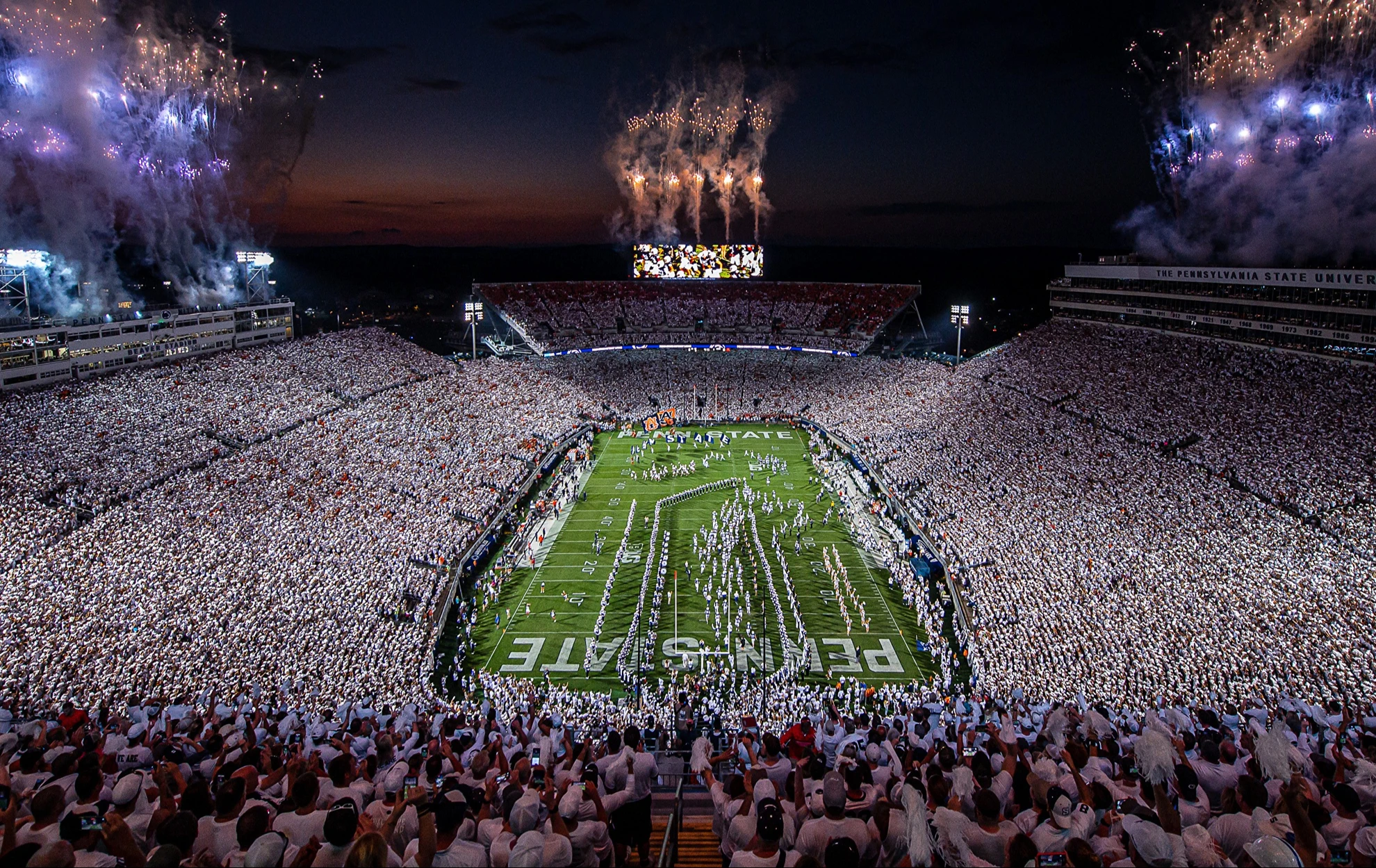
I’ve been a college sports fan for more than sixty years, and I’ve spent a large part of my professional career covering football, basketball, and Olympic sports. But one myth that athletic departments from coast to coast have pushed for decades is the idea that athletics are what attract students to a university. And now, with TV deals bigger than ever, that myth has only grown louder — as if academics somehow take a back seat to king football.
Despite raking in tens of millions from TV contracts, ticket sales, sponsorships, and donations, the uncomfortable truth is that roughly 75–80% of Power Four athletic departments still operate in the red. The money may look enormous on paper, but expenses outpace revenues at most ACC and Big 12 institutions, and even several SEC and Big Ten schools outside the elite tier. Private schools don’t release full numbers, but the trend lines point the same way. The NCAA’s 2023–24 financial summary confirms it: median expenses exceed median revenues across the subdivision.
And when these deficits hit, they’re covered not by student fees or institutional subsidies — which remain minimal at the Power Four level — but by athletic department reserves, donor infusions, and internal budget maneuvers. In other words, even in the era of billion‑dollar media deals, most big‑conference athletic departments are still losing money. The NCAA’s own financial reporting backs this up, showing that a significant share of its member schools continues to operate in the red despite unprecedented revenue growth.
The Unsustainable Arms Race
The bigger issue is whether this model is even sustainable. The Power Four have spent a decade locked in an arms race of coaching salaries, facilities, support staffs, and now NIL infrastructure — all escalating faster than revenues can keep up. Media deals may be massive, but they’re already spoken for the moment they arrive, swallowed by guaranteed contracts and ever‑rising travel and operating costs.
Athletic departments can paper over the gaps with reserves and donor money for a while, but those are finite cushions, not long‑term solutions. At some point, the math stops bending. The system depends on perpetual growth, yet the expenses are growing faster than the revenue streams that supposedly justify them. That’s the real warning sign: even the richest leagues in college sports are burning cash to stay competitive.
What Happens When the Arms Race Breaks the System
The real question is what happens if the arms race keeps accelerating — and the early signs aren’t subtle. As coaching salaries climb past NFL levels, NIL collectives balloon, and facilities projects push into nine‑figure territory, even the wealthiest programs are approaching a breaking point.
At some stage, conferences will either need new revenue streams or they’ll be forced into hard choices: cutting sports, restructuring budgets, or finally confronting whether the current model is built to survive. The next wave of realignment, private‑equity flirtations, and athlete‑employment lawsuits will only intensify the pressure. If expenses keep outpacing revenues, the system won’t collapse overnight — but it will bend, and eventually something gives. The question isn’t if the model changes, but who gets reshaped by it first.
The Myth of the Front Porch: Why Academics, Not Athletics, Attract Students
For decades, athletic departments have sold the idea that football is the “front porch” of the university — the shiny entryway that draws students in. But the data tells a very different story.
Students don’t choose universities because the football team wins on Saturday. They choose them because of:
- Academic reputation
- Research strength
- Professional programs
- Career placement
- Faculty excellence
- Campus resources and student life
These are the engines that drive enrollment, tuition revenue, and long‑term institutional stability.
Meanwhile, the academic side of the university generates billions through:
- Tuition and fees
- Federal and state research grants
- Philanthropy tied to academic success
- Medical centers and research hospitals
- Graduate and professional programs
- Corporate partnerships and innovation labs
These revenue streams dwarf anything athletics can produce — even in the Big Ten and SEC.
Why Academics Outperform Athletics Every Time
Look at the numbers:
- A major research university can generate hundreds of millions to billions annually in research funding alone.
- Enrollment revenue — tuition, housing, fees — is the single largest financial engine of every Power Four institution.
- Academic reputation drives applications, not football rankings.
- Donors who give to athletics often made their wealth through the education the university provided — not through sports.
Football may be the front porch, but the porch doesn’t hold up the house. The classrooms, labs, libraries, and degree programs do.
The Real Story Universities Don’t Want to Tell
The myth that athletics “pay for themselves” or “fund the university” has always been convenient — and always false. The truth is simpler and more powerful:
Academics attract students. Academics generate revenue. Academics sustain universities.
Athletics provide entertainment, community, and tradition — all valuable. But they are not the financial foundation of modern higher education.
The sooner universities acknowledge that reality, the sooner they can build a model that is financially sustainable, academically focused, and honest about what truly drives their success.