

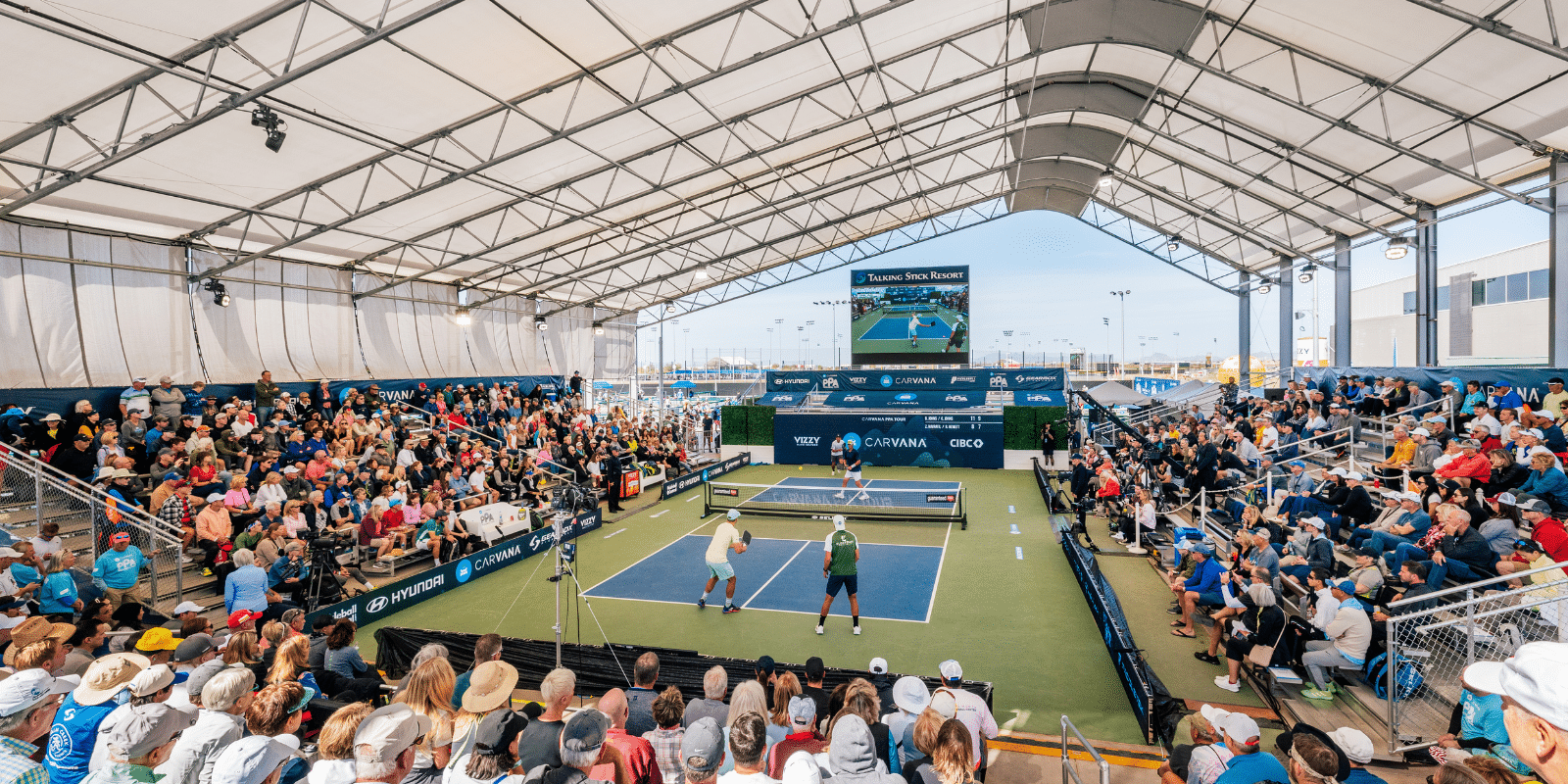
Pickleball has transformed from a backyard pastime into the fastest‑growing sport in the United States, and no place embodies that surge more than Florida. Across the Sunshine State, courts are filling before sunrise, recreation centers are expanding their schedules, and private clubs are racing to build new facilities to meet overwhelming demand. National participation has skyrocketed into the millions, with growth rates that outpace nearly every other recreational activity in the country.
The Latest – Sports Talk Florida
Fueling this momentum is the rapid expansion of professional pickleball leagues. Major League Pickleball (MLP) and the PPA Tour have attracted a wave of high‑profile investors who see the sport’s potential as both a business and cultural phenomenon. LeBron James helped ignite mainstream attention when he invested in an MLP team, and he’s far from alone. Kevin Durant, Tom Brady, Naomi Osaka, Patrick Mahomes, and Drew Brees have all joined the ownership ranks, signaling that pickleball is no longer a niche hobby — it’s a legitimate sports industry with star‑powered backing.
The Noise Factor: Cities From Florida to California Push Back
But with explosive growth comes friction. As courts multiply in parks, neighborhoods, and converted tennis facilities, the distinct pop‑pop‑pop of pickleball has sparked a wave of noise complaints across the country. In Florida, where courts are often built close to residential communities, some cities have enacted restrictions or paused new construction altogether. Homeowners argue that the repetitive sound — amplified by hard paddles and plastic balls — disrupts daily life.
This tension isn’t limited to the East Coast. From Naples to Newport Beach, from Miami to Marin County, municipalities have debated decibel limits, restricted hours of play, and in some cases shut down courts entirely. What began as a joyful recreational boom has evolved into a complex civic issue, forcing local governments to balance community enthusiasm with neighborhood tranquility.
Finding Balance: Innovation Aims to Quiet the Courts and Calm the Debate
Despite the noise controversies, the pickleball community is pushing toward solutions that allow the sport to grow without overwhelming nearby residents. Manufacturers are developing sound‑reducing paddles, quieter balls, and acoustic‑friendly court materials. Some clubs are installing specialized fencing and sound‑dampening walls, while architects are designing facilities that naturally absorb impact noise.
These innovations reflect a broader effort to strike harmony between passionate players and those who simply want peace and quiet. As technology improves and communities collaborate, pickleball’s future looks bright — not just as a booming sport, but as a model for how recreational growth and neighborhood quality of life can coexist.