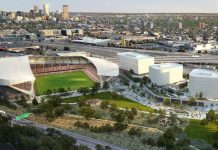



The Tampa Bay Rays’ new ownership group — led by Jacksonville real estate developer Patrick Zalupski and backed by MLB leadership under Commissioner Rob Manfred — has made it clear that the franchise’s future hinges on securing at least 100 acres for a transformative stadium village. This vision goes far beyond building a new ballpark. It’s about creating a full‑scale destination: a year‑round economic engine modeled after the wildly successful Battery Atlanta, home of the Atlanta Braves.
The Rays’ leadership has repeatedly emphasized that the franchise must evolve beyond the traditional stadium model. The team wants a multi‑use district that blends baseball with retail, restaurants, residential towers, hotels, office space, greenways, and entertainment venues. This is the formula that has redefined the Braves’ business model and reshaped expectations across professional sports.
Battery Atlanta didn’t just change how fans experience baseball — it changed how teams think about real estate. The Braves now generate revenue 365 days a year, not just during home games. Their district includes corporate headquarters, luxury apartments, boutique hotels, and a thriving restaurant scene. It is a self‑sustaining ecosystem, and the Rays want the same opportunity.
To replicate that success, the Rays need land — and lots of it. A downtown parcel simply cannot accommodate the scale of development required to build a modern sports village. The team’s vision requires space to grow, space to build, and space to create a district that can compete with the best in professional sports.
Why Modern Stadium Villages Require Massive Acreage
A 100‑acre “ballpark village” implies:
- Ballpark + plazas + structured parking
- Entertainment/retail spine (restaurants, bars, live music venues)
- Office campus or several mid‑rise office buildings
- Significant residential (several hundred to a few thousand units)
- Green space / trails / water features
- Often pad sites for hotels and outparcel retail
That’s closer to an entire new district or mini‑city rather than just “what’s around the park.” It’s more in line with what teams and developers aspire to when they talk about “24/7 neighborhoods” anchored by a stadium.
Publications like USA Today, Sports Business Journal, and the Atlanta Journal‑Constitution have documented this shift extensively. Teams want control, flexibility, and long‑term revenue streams that downtown parcels rarely provide.
The National Trend: Stadium Villages Replace Downtown Ballparks
Across the country, professional sports franchises are embracing the stadium‑village model:
- The Atlanta Braves built Battery Atlanta on more than 80 acres, transforming the franchise’s financial outlook.
- The Texas Rangers developed a massive entertainment district around Globe Life Field.
- The Chicago Bears are pursuing a 326‑acre redevelopment in Arlington Heights.
- The Kansas City Chiefs have proposed a large‑scale entertainment district tied to their stadium plans now in Kansas.
- The Tennessee Titans are building a new stadium surrounded by a multi‑use riverfront district.
This is the new playbook: teams want to be developers, not just tenants.
Downtown stadiums — once the gold standard — are increasingly seen as limiting. They lack parking, lack expansion room, and often lack the zoning flexibility needed for large‑scale mixed‑use development. Teams want to build mini‑cities, not just ballparks.
The Rays’ leadership understands this. They know that to compete in the modern sports landscape, they must create a district that attracts fans, residents, businesses, and tourists year‑round.
Why the Rays Can’t Settle for Less Than 100 Acres
The Rays’ current situation in St. Petersburg has long been criticized for its isolation and lack of surrounding development. The team’s new ownership wants to avoid repeating that mistake.
A 100‑acre site allows the Rays to build a destination, not just a stadium. It allows them to create a district that can host concerts, festivals, corporate events, and community gatherings. It allows them to generate revenue from real estate, not just baseball.
And most importantly, it allows them to build a franchise that can thrive for decades.
The Economics Behind the 100‑Acre Requirement
Sports economists and business analysts have noted that stadium villages are not just real estate projects — they are economic engines. They generate:
- Sales tax revenue
- Property tax revenue
- Tourism spending
- Job creation
- Corporate relocation opportunities
Battery Atlanta alone has generated hundreds of millions in economic impact and has become a model studied by teams across the country.
The Rays want to replicate that success. They want to build a district that attracts businesses, residents, and visitors. They want to create a place where people live, work, and play — not just watch baseball.
To do that, they need land. And 100 acres is the minimum required to build a true stadium village.
Conclusion: The Future of the Rays Depends on Land
The Tampa Bay Rays are at a crossroads. Their new ownership understands that the future of the franchise depends on more than a new ballpark — it depends on building a 100‑acre stadium village that can transform the team’s economic future.
The national trend is clear: downtown stadiums are out, and mixed‑use sports districts are in. The Rays want to join the ranks of franchises that have embraced this model and reaped the rewards.
To do that, they need space. They need vision. And they need a site that can support the next generation of sports development.
The Rays aren’t just looking for land — they’re looking for a future.